Dorrigo Evans and Ella’s Engagement and Marriage
The Narrow Road to the Deep NorthDorrigo Evans and Ella’s Engagement and Marriage begins, in the evidence available here, as an apparently settled future: Dorrigo assumes they will marry, and believes Ella assumes it too. Their bond joins genuine kindness and devotion to the security of Ella’s family world, while Dorrigo’s growing attachment to Amy Mulvaney makes that expected future increasingly difficult to inhabit. His efforts to choose Ella do not resolve the conflict; they reveal how little certainty can be commanded by a plan, a social arrangement, or even affection.
An Assumed Future
Dorrigo met Ella in Melbourne while completing his surgical training. She was a teacher whose family placed her within a world he found both attractive and secure: her father was a prominent solicitor, her mother came from a well-known grazing family, and her grandfather had helped write the federal constitution. Ella’s family welcomed Dorrigo, a young man from a less privileged background with strong prospects, but their welcome carried an expectation that he would enter their world on its terms. The relationship therefore offered not only a companion but also a place in a social order that seemed durable and assured.
Dorrigo’s view of Ella held affection and reservation together. He sometimes found her dull, and her familiar observations seemed learned by rote; he was unsure what she thought beneath them. Yet he considered her kind and devoted, and her appearance and family world drew him. The contrast matters: he did not imagine their future as the culmination of a fully examined intimacy. He valued Ella partly for the life that seemed to come with her, a life of established rooms, clubs, and inherited confidence.
He treated marriage as another step forward, like completing his medical degree or receiving his commission. The two had not discussed marriage, but Dorrigo believed they both understood it as their destination. That assumption belongs to his broader faith in forward motion: since childhood, each advance had seemed to lead naturally to the next. The prospect of marrying Ella fitted that pattern, less a question to be decided than another milestone on a route he expected to keep improving his life.
Leave and the First Disruption
A brief encounter with Amy Mulvaney in an Adelaide bookshop unsettled this confidence, although Dorrigo had spoken with her only for a few minutes and did not know her name. On a forty-eight-hour leave the following week, he travelled by military flight to Melbourne and spent two days and a night with Ella. He tried to make their time together lively and close, as if movement and affection could steady him. He considered telling her about the woman in the bookshop, but could identify no event to report: he had talked, then left.
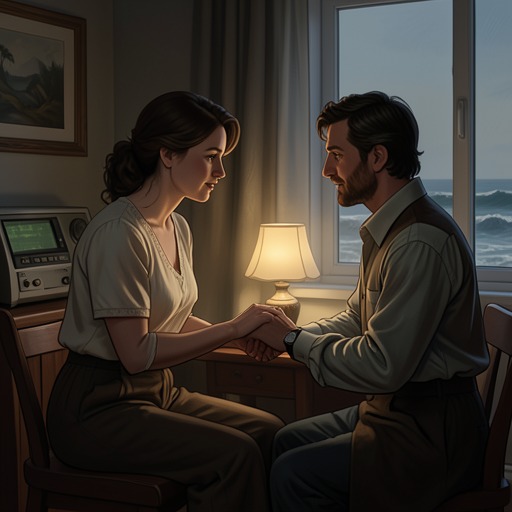
With Ella, Dorrigo confronted a troubling division between conduct and feeling. He held on to her as a source of security and recognized her beauty, but felt emotionally absent. His confusion and guilt did not follow from an affair; he believed he had done nothing. Instead, the encounter had altered what he could feel, without giving him a clear explanation or a practical course of action. The gap between his outward loyalty and inward disturbance became the first serious fracture in the future he had assumed.
Dorrigo responded by turning toward Ella rather than away. He kissed her, reminded himself of her kindness, and recognized that both of them might suffer through his pity and the way he understood their bond. As they continued to spend time together, his bleakness eased, and he nearly stopped thinking about Amy. The furlough then filled with parties, chance meetings, and introductions to Ella’s social circle. Dorrigo began to see himself as others saw him: a promising young man expected to achieve distinction after the war. In that setting, the pieces of his expected life seemed to fit together again, and his doubts receded.
Deliberate Loyalty and Growing Distance
After returning to Adelaide, Dorrigo immersed himself in military administration and evening parties, sometimes seeking distraction. When another leave came, six days long, he did not return to his uncle’s hotel. Instead, he went to Melbourne, spent his money on outings and presents for Ella, and tried to drive Amy’s memory from his mind. This was a conscious effort to preserve his relationship through attention and expenditure, but it did not restore his former response to Ella.
Ella looked into Dorrigo’s face and eyes for a matching hunger. He could see her searching for evidence that he felt as she did, and that recognition brought him concern. The face he had once found beautiful now seemed dull to him, while the trust he had once valued struck him as naïve. He disliked himself for those judgments, and tried to counter them by joining in her conversation, listening to her fears, jokes, and stories. His attempt to smother his memory of Amy therefore took the form of intensified closeness to Ella, even as his private comparisons made that closeness painful.
At dinner in Ella’s father’s club, a Royal Australian Air Force major entertained Ella with jokes and stories. When the major said he was going to a nearby nightclub, Ella asked Dorrigo to join them because she found the man so amusing. Dorrigo’s reaction combined jealousy with gratitude, without settling into either. The moment shows how unstable his emotional position had become: Ella’s enjoyment of another man’s company could sting, yet it could also relieve him of the burden of being the sole focus of her attention.
The Wartime Absence
Dorrigo reasoned that Amy was married to his uncle, that his feelings could have no future, and that he should avoid acting on them. He resolved not to visit her again. This decision marks an effort to protect the boundary of his relationship with Ella through separation from the person who had unsettled it. Yet choosing not to see Amy did not make the attachment disappear, and it did not make Ella the object of the feelings he was trying to redirect.
Later, in the prisoner-of-war camp, Dorrigo’s inner world had contracted around the absent woman he continued to remember. He thought of her voice, smile, and laugh, and held conversations with her in his mind. The passage explicitly distinguishes her from Ella. It leaves Dorrigo unable to determine whether his devotion to the prisoners and his longing for this woman are connected, and unable to answer his own question about what he feels. For the relationship with Ella, the significance is stark: the future once treated as inevitable has not secured her place in his private emotional life.
The Relationship’s Unresolved Meaning
The relationship is shaped by a persistent mismatch between what Dorrigo expects himself to feel and what he actually feels. Ella’s kindness and devotion are real, as are his efforts to respond to them; neither, however, gives him command over his attachment to Amy. His belief that marriage would follow naturally from professional and military advancement resembles his earlier confidence that every step leads onward. The bookshop encounter disrupts that orderly account without providing a replacement certainty.
The evidence presents Dorrigo and Ella’s bond through assumption, attempts at renewed intimacy, and emotional absence rather than through a documented wedding or a settled resolution. Ella represents a secure social future Dorrigo once wanted to enter, while the wartime recollection of Amy reveals how little that future can govern desire or memory. Their relationship’s central tension is not simply whether Dorrigo will remain loyal in outward conduct; it is whether loyalty and kindness can sustain a shared life when his inward attention has moved elsewhere.